
Value Types in Williamsburg City Property Records
A Williamsburg City property record can show land value, total assessed value, and sale fields all in one place. Those numbers are not interchangeable. The assessment is the tax value. A sale price comes from a recorded deed transfer. An appraisal is a licensed opinion prepared for a particular purpose, not a figure the city assigns. Match each value to its source and date before deciding what a parcel might sell for.
| Value | What It Is | Where |
|---|---|---|
| Assessed value | Annual value carried for city real estate taxation | PDF property card and assessment reports |
| Market value | A current sale estimate requiring its own evidence | Not established by the tax card alone |
| Last sale price | Consideration reported for a past transfer | Sale fields and recorded deed context |
| Land / total | Assessment components shown on the card | City assessment card |
Virginia requires annual assessments at 100 percent of fair market value under §58.1-3201, but a mass appraisal remains a tax measure rather than a licensed appraisal for a sale. City budget material reports an average residential assessment-to-sales ratio near 92:100 for the July 2024–June 2025 sales period. That ratio compares groups and does not prove that a particular Williamsburg home is over- or under-valued.
Williamsburg Annual Value Cycle
Williamsburg reassesses real estate every year. For FY2027, the city used values effective January 1, 2026 and mailed notices on February 27, 2026. That cycle gives a clear valuation date. The assessed value rarely matches the latest sale price. Read each card beside its Print Date and the applicable fiscal-year bill.
City budget material places the average residential assessment-to-sales ratio at about 92:100 for sales from July 1, 2024 through June 30, 2025. That is a market-level measure. For one parcel, weigh similar sales and the city's supporting assessment data. Never apply the citywide ratio as an exact discount.
Williamsburg Card Value Fields
The PDF property card is the city's stated display for owner and assessment values as of its Print Date. Its instructions list a value summary, Land Value, and Total Assessed Outside. The parcel name and owner appear too. Skip the assessment text in the map-result list. The city says that search-result data may be stale.
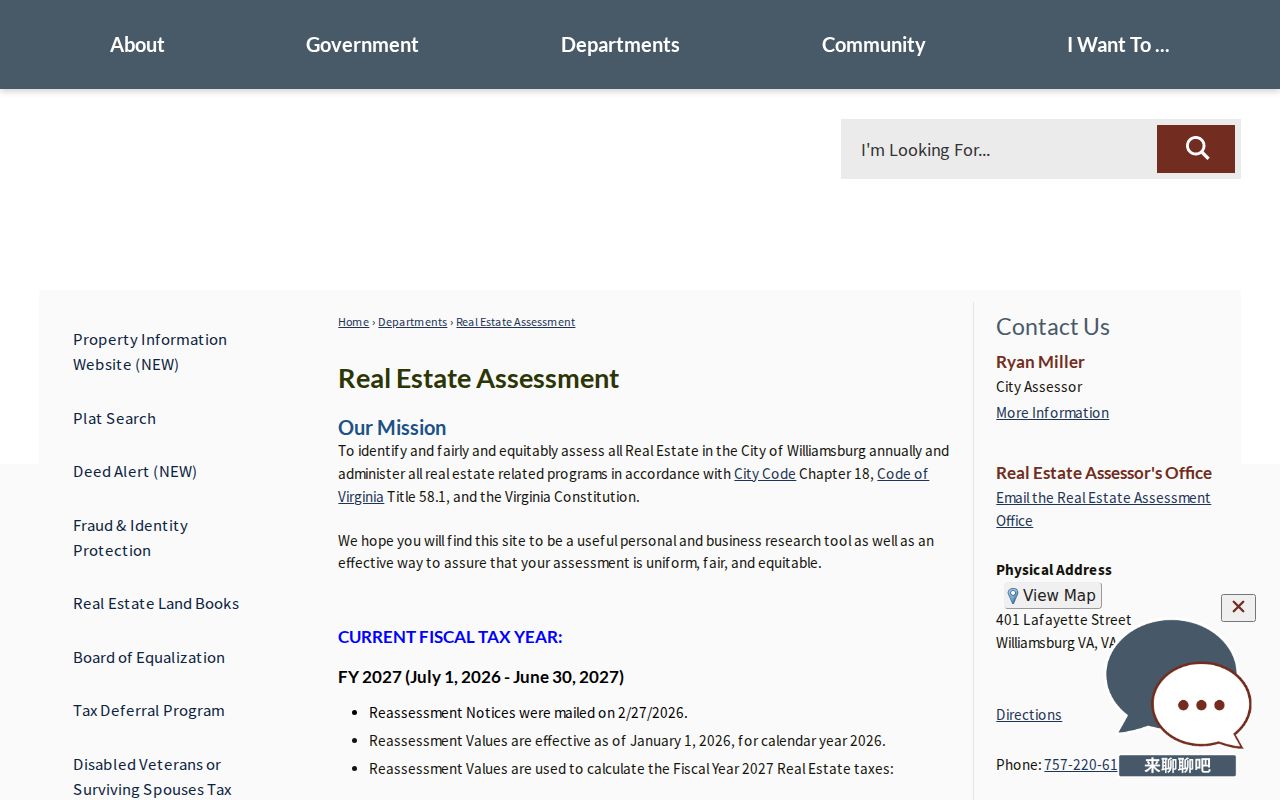
The Real Estate Assessment page links the current reports and review material. It displays the city's assessment information and available forms.
When you need a value tied to a specific date, go to the PDF card. The map popup is not that record.
Find a Williamsburg City Assessed Value
Start with the parcel address. Search it in the GIS property site, select the parcel, and open the PDF property card. Save the Print Date. Note the land and total assessment fields too. The city warns against searching by Current Owner because that field has not been updated recently, so the card remains the intended value source.
- Search the situs address and select the correct city parcel.
- Open the PDF property card and record its Print Date, Land Value, and total assessed amount.
- Check the GIS sale and deed fields, then confirm a transfer in the circuit-clerk index.
- Use comparable properties and assessment work papers for review evidence; do not treat the card as an appraisal.
- Assessed value
- The annual value carried on the city’s tax roll.
- Market value
- An estimate of likely sale value for a stated date and purpose.
- Assessment ratio
- A comparison of assessments with observed sales across a group.
- Sale price
- The amount reported for a particular recorded transfer.
Williamsburg Sale Price Context
The city parcel table carries Sale_Date, Sale_Price, Sale_Type, and a Qualified flag. These fields mark a reported transaction. Not every sale is comparable to an arm's-length deal. A family transfer or fiduciary conveyance needs context before it serves as a market benchmark.
Check the deed itself. The recorded instrument supplies the party and the legal description, while the GIS value is only a lead. A past price does not predict current value when the assessment date or property condition differs. Line up the dates first.
Williamsburg Exemptions and Value
Exemptions and deferrals appear on the city's assessment page as separate services. Those programs change tax treatment. They never change what a parcel last sold for. Check the current city forms for program rules. Eligibility never follows from the owner name or a card field.
For bill amounts, installment dates, or exemption application steps, use the Williamsburg City property tax records page. Here the value question is narrower.
Williamsburg Value Review Evidence
Virginia Code §58.1-3331 makes appraisal cards and sheets held by the assessing officer public, subject to protected information. That right is broad. A taxpayer or authorized representative may inspect work papers. They can also request the methodology, capitalization rate, comparable sales, and other factors behind a value. That supports a focused assessment question.
The city's informal review form and Board of Equalization route sit apart from a private appraisal. Bring comparable sales from the period. Bring the card's land and total fields, plus parcel-specific facts, and never apply the citywide 92:100 ratio as a formula for one property.
What Williamsburg City Assessed Value Means
A Williamsburg City assessed value exists for annual taxation. It can differ from a buyer's offer, the last recorded consideration, or a fee appraisal. The city's GIS disclaimer says as much. Property information does not replace a fee appraisal. A parcel card is evidence of the public roll, never a promise of current sale value.
Value vs price. An assessed value is not a Williamsburg City sale price or a personal appraisal. For a transaction-specific opinion, use a qualified appraiser and current market evidence.