
Fields in Williamsburg City Tax Records
An assessment is the city's value for taxation. It is not a sale-price forecast. Williamsburg City tax records run from that real estate assessment through the Treasurer's bill. The PDF property card is the current public display of owner and assessment data. It reflects its Print Date. Citizen Self Service supplies the bill and payment details instead. Keep both records handy. An assessment year and a tax installment do not cover the same time period.
| Field | What It Shows | Where |
|---|---|---|
| Assessment | Land and total values on the dated property card | City Real Estate Assessment |
| Owner and parcel | Owner display, situs, parcel identity, and mailing data | PDF property card |
| Exemptions and deferrals | Relief or deferral information maintained by the city | Assessor forms and office |
| Bill and payment | Bill number, property ID, installments, balance, and payments | City Treasurer / Citizen Self Service |
| Review record | Informal review request and Board of Equalization route | Assessment office and BOE |
The FY2027 assessment uses values effective January 1, 2026. Recent city budget material cites a residential assessment-to-sales ratio near 92:100. The ratio covers qualifying sales. Those ran from July 1, 2024 through June 30, 2025. It compares groups, not one parcel. So it does not fix the value of a particular Williamsburg property. A tax bill also reflects the billing calendar and any relief. So it is not a sale-price record.
Williamsburg Annual Assessment Dates
Real estate in Williamsburg gets a fresh valuation every year. The city does not wait on a multi-year cycle. The City Real Estate Assessment page says FY2027 bills drew on January 1, 2026 values. Assessment notices went out February 27, 2026. Keep the assessment date straight in your head, because it fixes the valuation. It is not a due date. It is not the date of any later sale.
The assessment office page gathers current reports, forms, exemptions, and deferrals in one place. Its summary pegs the residential assessment-to-sales ratio near 92:100. That figure covers sales from July 2024 through June 2025. The ratio gives useful backing for a review request. Still, any comparison you make should lean on like properties measured over the same valuation window.
Dated value and review resources also live on the city assessment page. Revisit it in a later tax year, once the FY2027 dates have aged out.
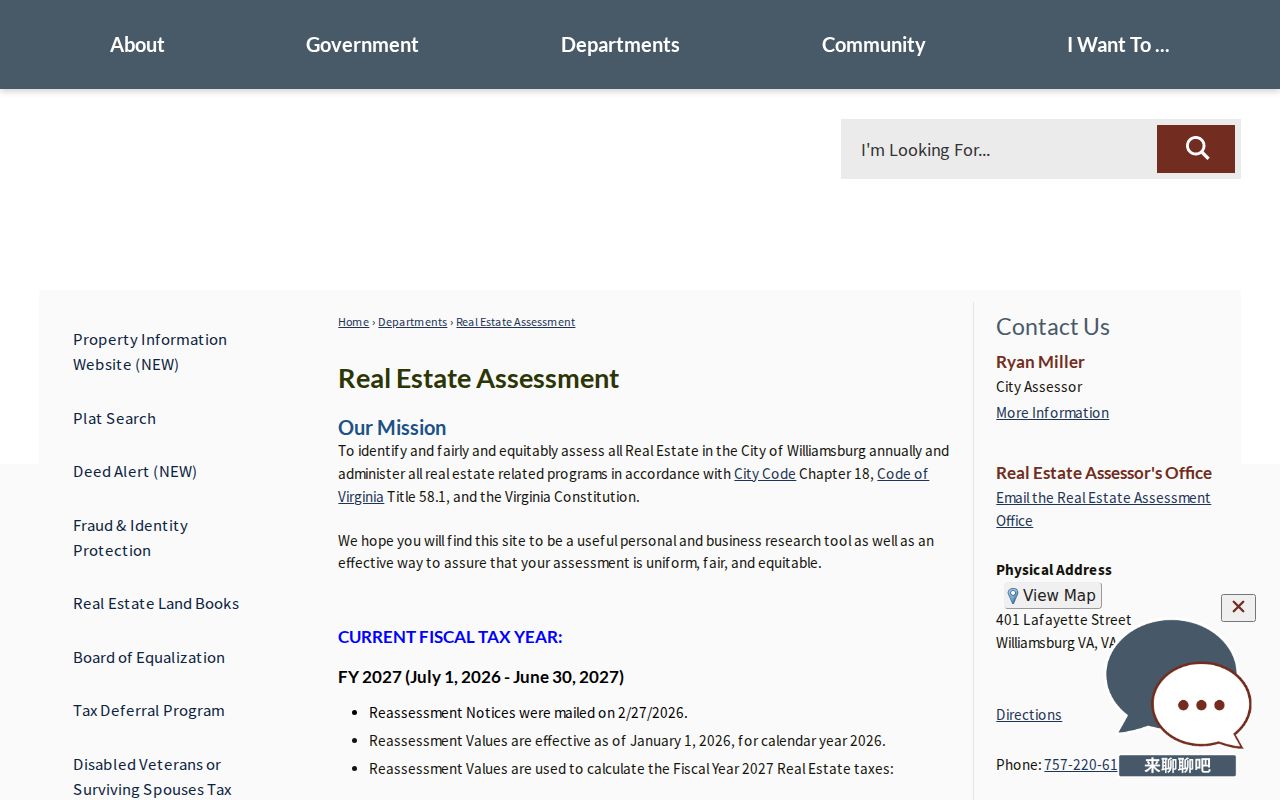
Keep the notice with the card when comparing value years.
Williamsburg Tax Bill Search Keys
Citizen Self Service asks for the bill number and property ID from the tax notice. These keys are not interchangeable with GPin, Parcel_ID, or an owner name. The portal supports bill lookup and payment. It offers no public street-address search. If a bill will not come up, compare the number on the notice. Confirm the parcel sits inside the City of Williamsburg. The Treasurer, at 757-220-6180, handles account-specific questions. For day-to-day status, the online path works well. The mailed notice remains the practical source of the bill's search keys, and the Citizen Self Service portal explains the bill-number and property-ID route.
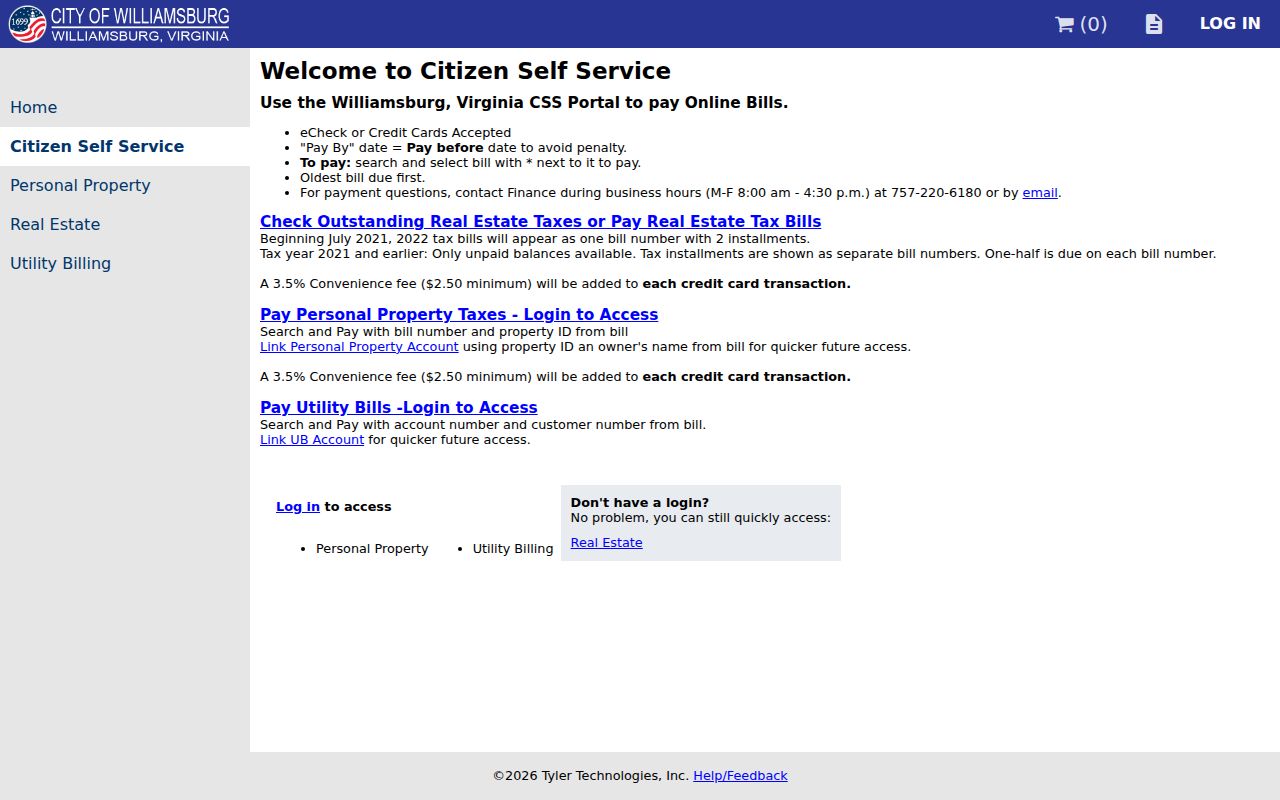
Use the bill number printed on the notice.
Two Williamsburg Tax Installments
Since 2022, one bill number covers two installments. The first half of FY2027 spans July 1 through December 31, 2026. It is due December 1, 2026. The second half spans January 1 through June 30, 2027. It is due June 1, 2027. Unpaid balances from 2021 and earlier appear in the portal under separate bill numbers. These dates track the fiscal billing schedule, not the assessor's January 1 valuation date.
A card payment adds a 3.5 percent service fee with a $2.50 minimum. Monthly payment arrangements may be accepted. They are not automatic. A late payment can cancel one and lead to collection action. Confirm current account status directly with the city.
Find a Williamsburg City Tax Bill
Open a Williamsburg City real estate bill with the bill number. Use the property ID from the notice as well. Then compare the current installment, prior balance, payment status, and any listed arrangements. A tax bill is not an ownership record. For ownership, rely on the assessor card and the recorded deed.
- Enter the bill number and property ID printed on the notice in Citizen Self Service.
- Review the current installment, amount due, payment history, and any older separate bill.
- Compare the notice with the assessor card and confirm exemptions or deferrals with the city.
- If an amount is unclear, ask the Treasurer about the account rather than inferring a lien or sale.
- Assessed value
- The annual value carried on the city’s real estate roll.
- Bill number
- The lookup key printed on the tax notice.
- Property ID
- The property key Citizen Self Service asks for with the bill number.
- Installment
- One half of a fiscal-year real estate bill.
Williamsburg Exemptions and Deferrals
The Real Estate Assessment page lists exemptions and tax deferrals. Each program has its own application and eligibility rules. Use the city's current forms. Do not assume a category fits a parcel. Relief affects the tax burden, but it does not change the deed's recorded sale price or prove a different market value.
For an assessment question, ask the assessor which value, exemption, or deferral field is under review and what supporting record is needed. The public material separates assessment review from exemption applications. Keep copies of submitted forms and notices with the parcel card so year and status stay clear.
Evidence for a Williamsburg Review
Virginia Code §58.1-3331 puts appraisal cards and sheets in the assessing officer's custody on public view. Protected details are withheld. A taxpayer, or an authorized representative, may inspect the working papers behind a valuation. The law also lets that person ask for the methodology. It allows the capitalization rate, comparable properties or sales, and any other factor used to set value. A focused request works best. Ask narrow questions about how the city reached the assessment. Avoid filing a broad demand. Building a case takes comparison. Match the parcel against similar properties and write down the dates and records relied on. The card's land and total assessment fields, a nearby sale record, and a plat or improvement detail can frame the question. One asking price will not carry the day. A sales-ratio average alone is not enough either. Neither proves an error on an individual parcel.
Tax Delinquency and Court Records
An unpaid balance in Citizen Self Service signals collection status, nothing more. It is not proof of foreclosure or sale. A court action, if one exists, leaves a different trail. Search the circuit case-information route. Search the SRA land index for a lis pendens, lien, judgment, trustee's deed, or release. The docket may describe the dispute. The recorded instrument is the land-record entry that matters. The city says payment arrangements may be available, subject to approval and current payment compliance. Ask the Treasurer about the bill first. Treat a delinquency as a sale event only after a recorded document says so. Court files need a separate step. Contact the clerk directly, because City FOIA does not extend to court records.
Challenge a Williamsburg City Assessment
Williamsburg City owners get two steps. The path starts with an informal review by the assessor. If the owner still contests the assessment, the Board of Equalization comes next. The FY2027 Assessment Review Application sets January 1, 2026 as the valuation date, and the possible outcomes include no change, a decrease, an increase, or equalization with neighboring properties. Any request should identify the parcel plainly. It should also tie the evidence to that effective date.
Appeal window. The city’s Board of Equalization page gives May 1 as the filing deadline and requires the administrative review step first. Check the current application and deadline with the city before filing.
The Board of Equalization page lays out the prerequisite, the application, and the circuit-court appeal route. Its summary chart traces each stage of the city's published BOE process.
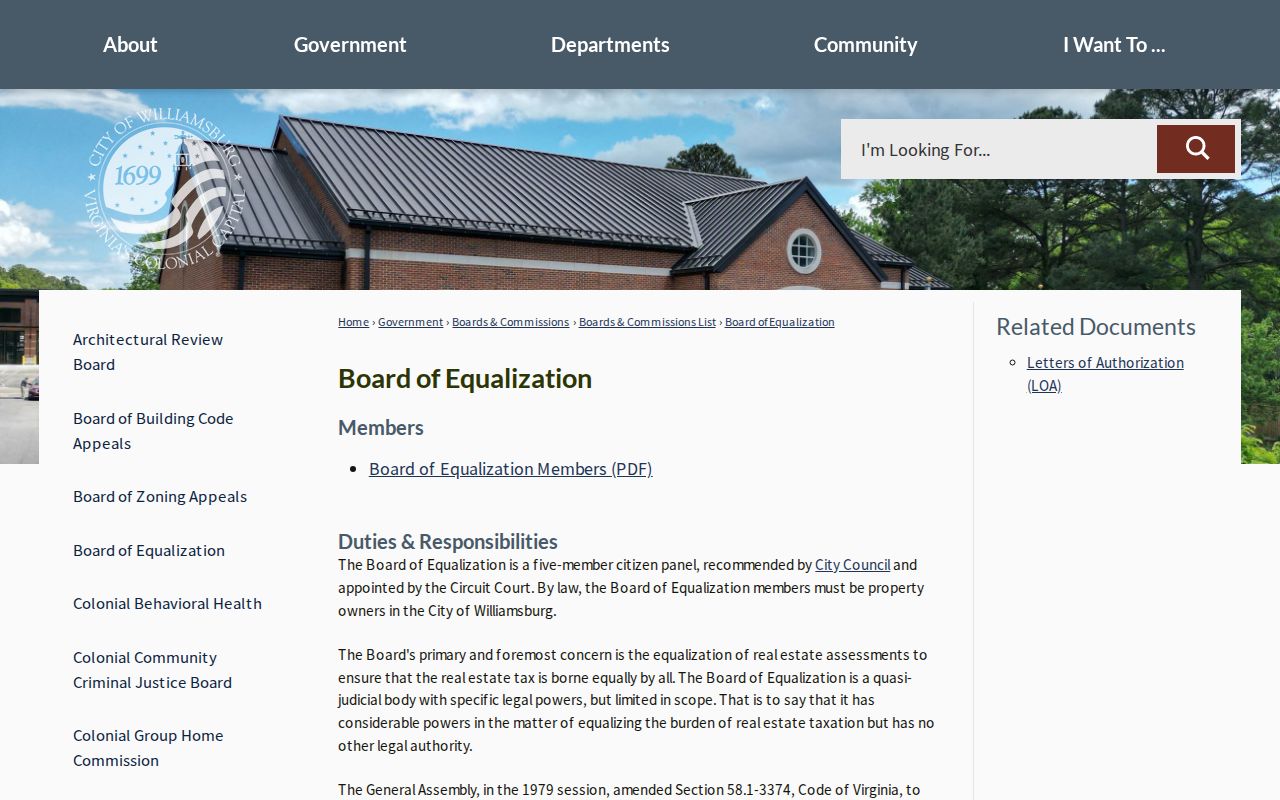
Keep the filed form and any response, so a later appeal can follow the correct administrative sequence.