
Backward Transfers for Williamsburg City Land
Work backward through prior Williamsburg City owners one recorded transfer at a time. The table below is a working chain, not a sample with invented names. Copy each party and reference straight from the actual deed. Use that grantor to locate the earlier grantee entry. The earliest surviving local deed volumes begin after the 1865 fire, and the SRA page does not state the current locality's online cutoff.
| Transfer to Trace | Grantor → Grantee | Deed Type | Reference to Copy |
|---|---|---|---|
| Most recent transfer | Read parties from the current deed | Conveyance instrument | Recording date and SRA reference |
| Prior transfer | Current grantor as earlier grantee | Earlier deed or fiduciary deed | Book/page or instrument number |
| Historic transfer | Continue party chain in surviving volumes | Deed book entry | Volume, page, reel, and description |
| Subdivision context | Match lot and legal description | Plat or land book | Plat reference and parcel label |
Use SRA for the recent party index. When the web index stops, ask the clerk about local land books and the Library catalog. A tax book or will can add a name or date. Neither replaces the deed that actually records a transfer.
Williamsburg Deed Chain Backward
A grantor transfers the interest a deed describes. A grantee receives it. To trace Williamsburg City former owners, begin with the newest deed and move from its grantor to the prior grantee. Match every deed by legal description, parcel, and date. Names alone can point to an estate, a trust, or a different person entirely.
- Locate the latest recorded conveyance that matches the parcel’s legal description.
- Write down its grantee, grantor, deed date, recording date, and clerk reference.
- Search the grantor as grantee in an earlier record and compare the parcel description.
- Repeat the transfer check until the index stops or the record enters older books.
- At a gap, look for wills, fiduciary deeds, partitions, plats, or chancery files that explain the change.
- Grantor
- The party conveying an interest.
- Grantee
- The party receiving an interest.
- Chain of title
- The ordered sequence of land transfers.
- Legal description
- The written parcel description used to match older records.
Follow Earlier Williamsburg City Grantees
Virginia SRA offers a public land-record index. It covers the shared Williamsburg and James City County Circuit Court. It publishes no guaranteed Williamsburg cutoff year. Search the newest owner as grantee. Open the latest matching transfer if authorized, and use its grantor to keep moving backward. The current card's Print Date may be newer or older than the deed itself. Record both sources and their dates.
- Find the latest deed with the current owner as grantee.
- Read the grantor and legal description from the instrument.
- Search that grantor as an earlier grantee and match the same land.
- Write down the recording reference and move to land books or archives when the online result ends.
- Grantor / grantee
- The parties transferring and receiving the stated interest.
- Chain of title
- The linked series of prior recorded transfers.
- Legal description
- A more stable match key than a modern street address.
Williamsburg Deed Books and Fire Loss
The 1865 Williamsburg fire destroyed records. The Library of Virginia catalog identifies surviving Deed Book 1, covering 1865 to 1883, and Deed Book 2, covering 1883 to 1896. The site also describes Williamsburg and James City County deed material from 1849 to 1920, an 1865 table of town lots, later land books, and wills. These collections can extend a chain. Still, a nearby series does not prove a missing deed survived. The Library's Williamsburg microfilm page lists the local books and reel. Its inventory is the next step once the online index stops reaching the transfer.
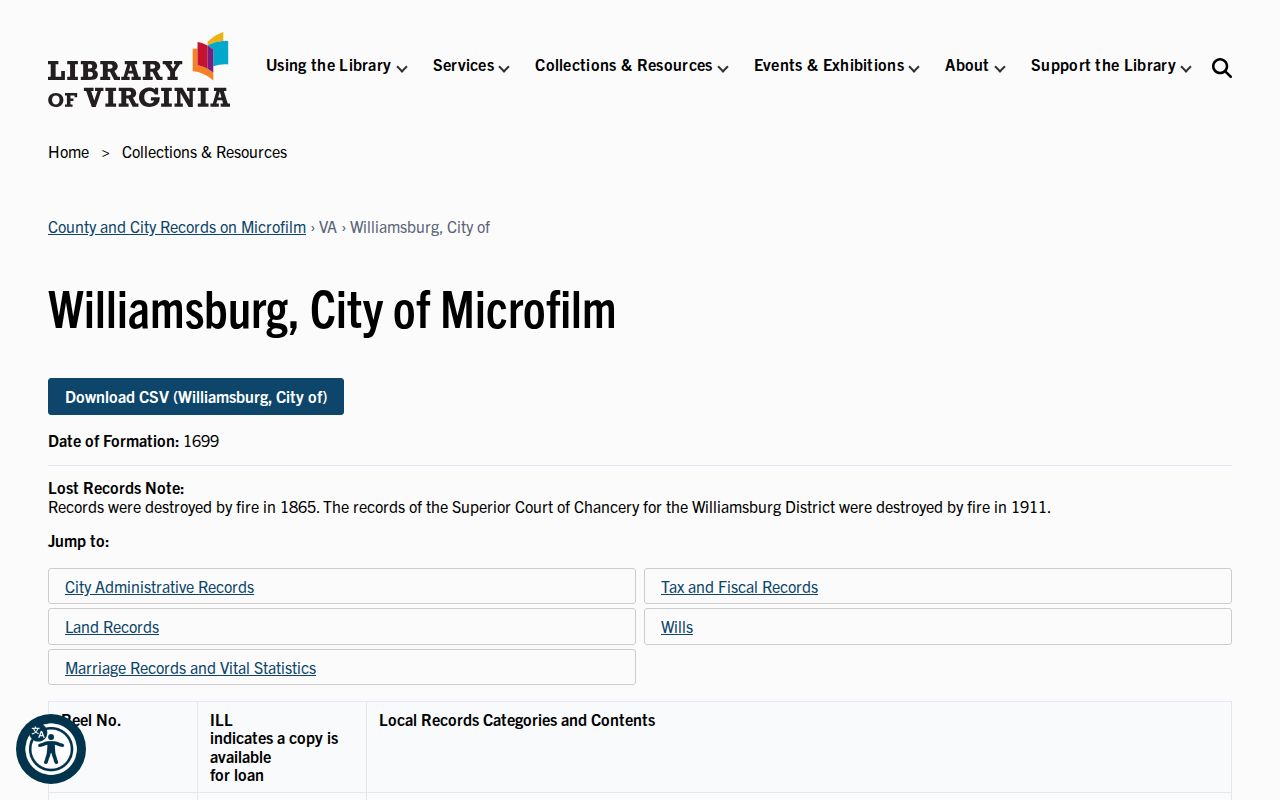
Note: Check the catalog's reel and volume notes before requesting a film or hard-copy search.
Williamsburg Chancery Chain Gaps
A gap in the deed chain may reflect inheritance, partition, or a court dispute. It may not be a normal sale. The Library of Virginia's online Chancery Index covers Williamsburg City and James City County cases from 1799 to 1967. Scanned originals are included where available. A 1911 fire destroyed Superior Court of Chancery records for the Williamsburg District. A missing case file can therefore be a real archival limit. Search the Chancery Index by party and locality. Then connect the case to a deed, probate order, or parcel description. Chancery explains the dispute or transfer context. It is no substitute for the recorded instrument.
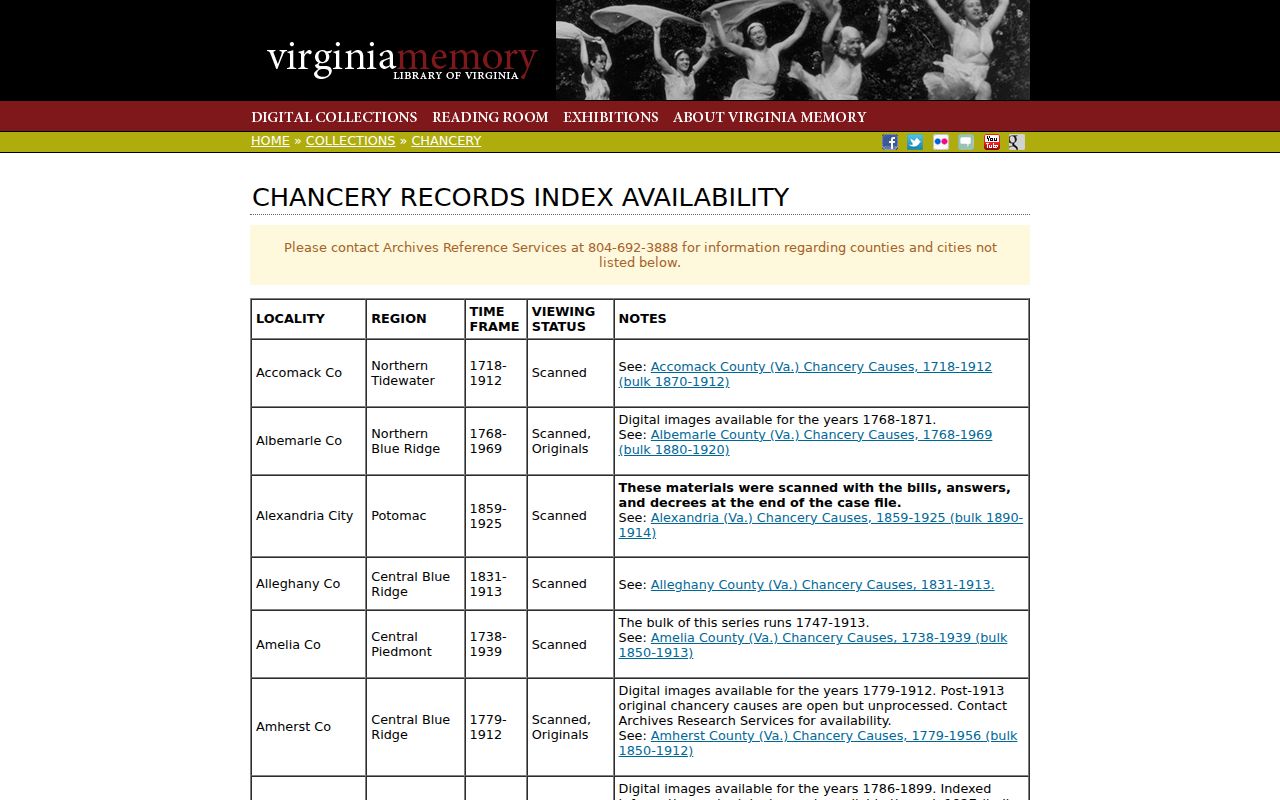
Note: Use the case to locate a land reference and verify it in the clerk's records.
Williamsburg Estate Transfers
When an owner died, property might pass through a will, qualification, fiduciary deed, court order, or distribution. It did not always move by market sale. Williamsburg probate records sit with the shared circuit clerk's probate department. Library of Virginia microfilm lists Will Book 1, 1858 to 1892. Will Book 2 runs 1892 to 1921. Will Book 2A spans 1869 to 1902. These series can supply context for a transfer that resists a simple name search. Record the decedent, fiduciary, case number, real-estate reference, and related deed number where available. A will or obituary alone does not establish that title passed. Compare the probate authority against the recorded fiduciary deed or order. Virginia Department of Health genealogy resources explain which vital records are open. They also show where older material sits. A death record can flag an estate event. It is not a deed. The VDH genealogy page describes public record periods. It routes older material to the Library of Virginia.
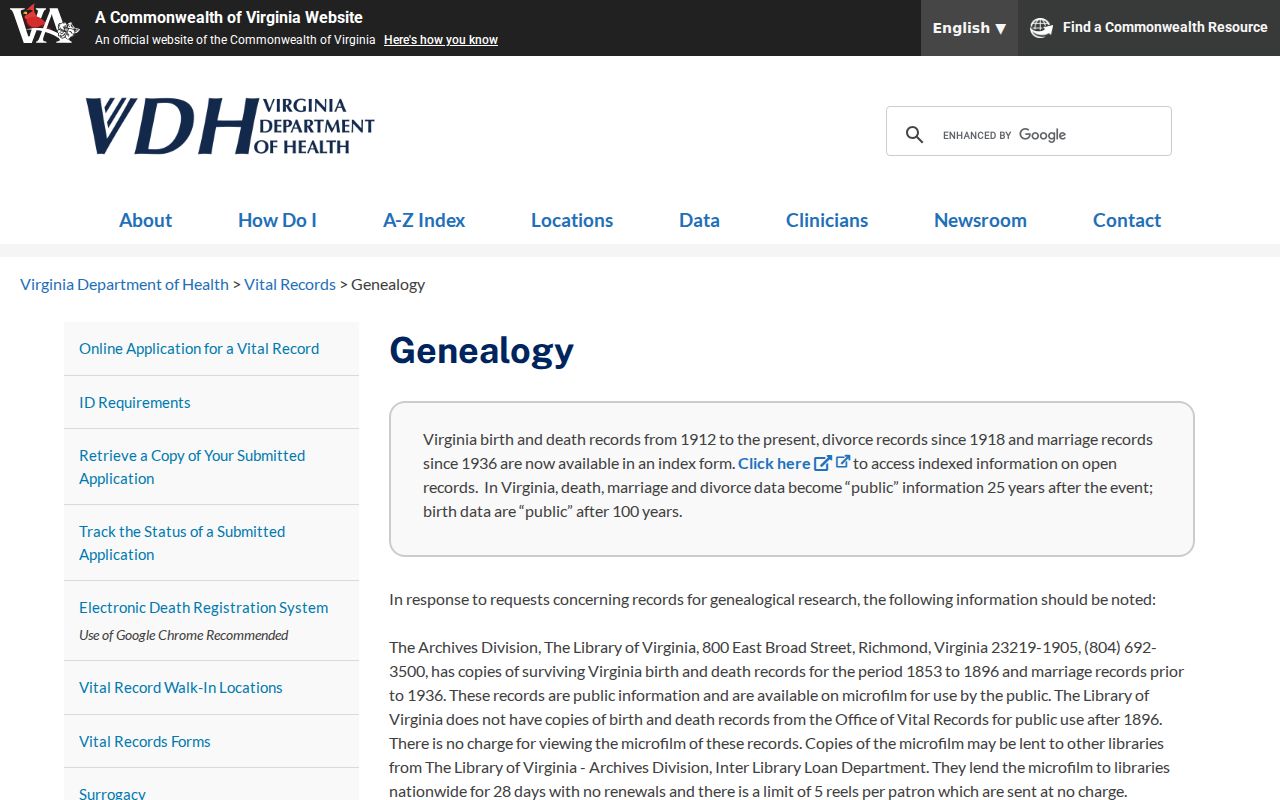
Note: Treat vital-record information as a lead to probate or a recorded transfer, never as proof of ownership.
Williamsburg Annexation and Old Addresses
Williamsburg grew through annexations in 1915, 1923, 1941, 1964, and 1984. A deed may describe a town lot or locality. That place may no longer match the city boundary. The GIS service includes an Annexation layer and neighboring-county lines. Use those for orientation. Keep the historic deed wording exactly as written. A Williamsburg postal address can also fall in James City County or York County. If a parcel seems to vanish from the city roll, check the jurisdiction first. The earlier owner record may not be missing at all.
Williamsburg Index and Copy Limits
Virginia's state index is public, but deed images work differently. Williamsburg images may require local authorization, a signed agreement, or a subscription. The clerk's office publishes no coverage cutoff or certified copy fee schedule online. Ask the Recording Department directly. When an image will not open, the counter route at the clerk's office is the practical answer. Older deed books often live in the Library of Virginia collection instead.
Copy requests and deed mechanics have their own write-up on the Williamsburg City deed records page. The history search here stays on the sequence of prior owners. It does not cover ordering a single certified copy.
Williamsburg City Archive Coverage
The earliest surviving Williamsburg City deed books, per the Library catalog, begin in 1865. The city fire accounts for the gap. That date marks where the existing volumes start, nothing more. It does not mean the online deed index reaches back that far, and it does not rule out earlier land material held elsewhere. Tax rolls, land books, wills, and town-lot papers from other locality series may still fill in the story for anyone tracing property records before that point.
Lawful use. Former-owner research in Williamsburg City is for property history and due diligence. Do not use names in old deeds or current records to track, threaten, or harass a living person.